

Hans Ulrich Obrist
AUTOUR D'UNE ŒUVRE
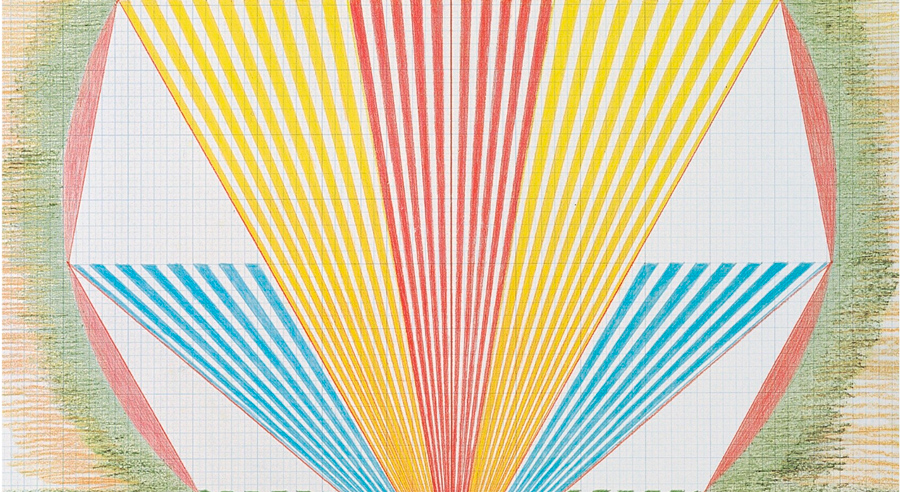
Work No. 168 d’Emma Kunz
In our encounter with a prominent figure from the world of art and culture, we posed a single, straightforward question: Which artwork has marked you deeply and continues to hold meaning in your life and career? A return to the fascination, wonder, unease, or shock that a work of art can awaken in us.
Par Fanny Revault
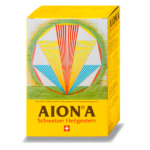
When did art first enter our lives? For Hans-Ulrich Obrist—art historian, critic, and curator of exhibitions around the world—it was a drawing by Emma Kunz featured on a box of AION A, the remedy his mother regularly bought at the pharmacy.
That drawing was always within reach at home. It awakened in him an immediate, intuitive connection to art. From this tender and benevolent relationship with art emerged a deep understanding—one that undoubtedly shaped the clarity and assurance of his eye, propelling him to the pinnacle of the international art world.
Later, he discovered the full breadth of her body of work. Hans-Ulrich Obrist reflects here on the importance of this visionary artist, whose practice seamlessly intertwines art and spirituality. At once an artist, researcher, and healer, Emma Kunz produced more than 350 drawings, all created with the aid of her pendulum. This childhood memory never left him. In 1992, he organized one of the first exhibitions dedicated to her at the Centre Culturel Suisse in Paris, and more recently in 2019 at the Serpentine Galleries, which he has directed since 2016. Encounter.
What was your first encounter with art?
One experience in particular left a deep impression on me during childhood, and I would say it was the work of Emma Kunz. I have always been profoundly transformed by her art. I did not grow up in a Swiss household where art played any significant role. Yet art entered our home thanks to Emma Kunz, because when I was a child, my mother often bought a product called AION A—a remedy that Emma Kunz herself discovered. It is a powder derived from a rock also named AION A, whose healing properties Kunz identified. In many Swiss pharmacies, this product was sold in packaging featuring one of her drawings. It was through AION A that art first entered our house.

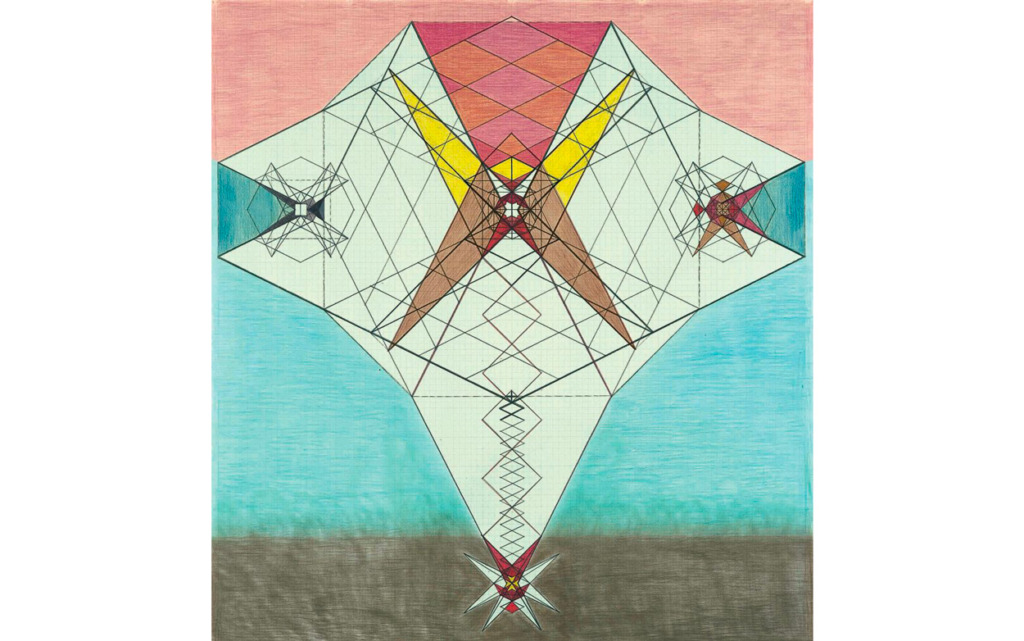
Boîte d’AION A®

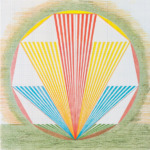
Work n° 168, Emma Kunz, ©
Your encounter with her drawings left a profound mark on you. All the more so because Emma Kunz was not only an artist—she was also a healer. One senses the full complexity and depth of such a remarkable personality.
Yes, she was not only an artist but also a healer. She treated people and, among others, cured Anton Meier, the founder of the Würenlos center that I came to know. He was paralyzed; she healed him, and it was after that experience that he went on to create the center.
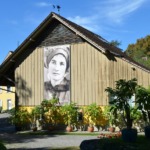
For me, discovering Emma Kunz’s universe was fundamental. One can visit the stone quarry in Würenlos, but it is also the place where many of her drawings can be seen.

Centre Emma Kunz Würenlos © Emma Kunz Centrum und Steinbruch

Grotte Emma Kunz ©

How many drawings did she create during her lifetime?
She produced around four hundred drawings over the course of her life, each one possessing an extraordinary intensity. Her works on paper are executed in pencil as well as colored pencils. They are very large-format pieces. She also worked with oil pastels, of which she created about thirty.

Work n° 168, Emma Kunz, © Emma Kunz Zentrum

Work n° 013, Emma Kunz, © Emma Kunz Zentrum
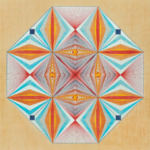
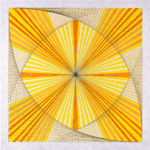
In your book, you write: “On the AION A packaging there was a drawing by Emma Kunz, and that work is truly fundamental to my understanding of the relationship between art and spirituality.” How do you perceive the spiritual dimension in her drawings?
Yes, there is a connection between spirituality and abstraction in her work. But it goes far beyond that. In reality, her drawings possess a multidimensional quality. One perceives all these dimensions at once. Emma Kunz herself compared her drawings to holograms. She created them with the aid of a pendulum; it was a ritual.
The German-Korean philosopher and writer Byung-Chul Han, who lives in Berlin, has written a book precisely on this idea: we live in an age of communication, yet one often marked by the disappearance of rituals. I believe this is very important. As Tarkovsky said, “We must revisit and reinvent rituals for the twenty-first century.” I think Emma Kunz can help us do exactly that—along with her entire body of work.
Could you tell us more about the ritual dimension of her work?
She would work for hours on end, often without sleeping. She believed that the intensity of this process could have an impact on the course of history. One day during the Second World War, she created a drawing with the hope that working with such great intensity might bring about Hitler’s disappearance. She truly believed in this. Using her pendulum, she drew with such force that she would not sleep until the work was complete.
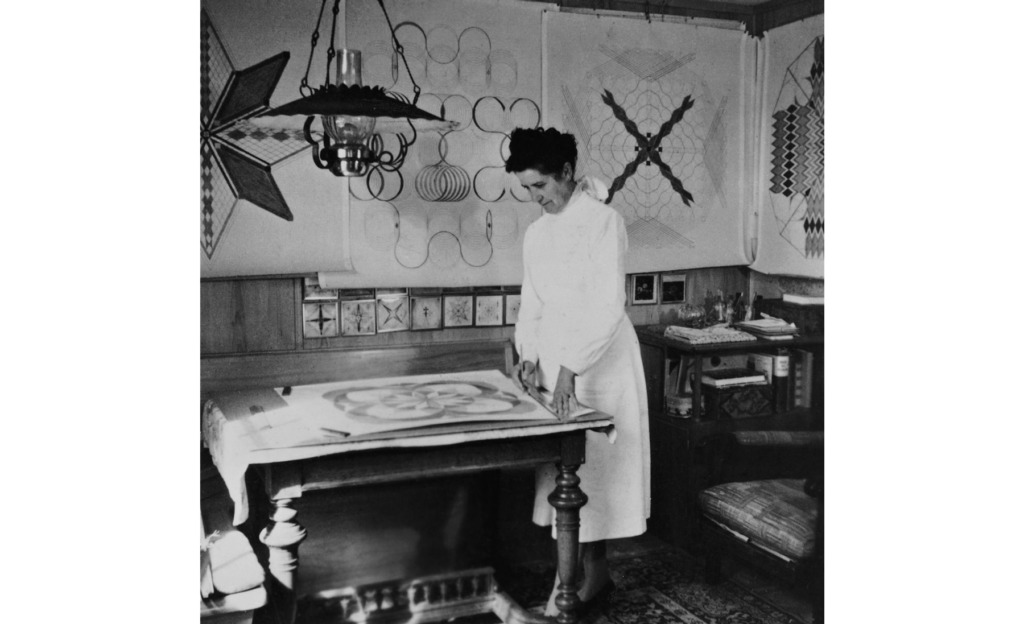
Emma Kunz transcends disciplinary boundaries… Artist, medium, and healer, she engages a vast field that encompasses multiple disciplines.
Yes, Emma also saw herself as a scientist. I believe the physicist C.P. Snow, in a sense, highlighted this divide between the humanities and the sciences: the arts on one side, science on the other. He argued that we needed a bridge to overcome this dichotomy. We should not remain trapped in this binary thinking, but instead create a third space of encounter.
How has Emma Kunz’s work accompanied you throughout your international curatorial career?
From my childhood onward, I have been fascinated by her work, and Emma Kunz has, in a sense, accompanied my entire life as a curator and museum director. It was also the subject of my first institutional exhibition, which I organized in 1992. I was invited as guest curator by the Centre Culturel Suisse on rue des Francs-Bourgeois in Paris. Together with Bice Curiger, we mounted an exhibition that explored Emma Kunz’s influence on contemporary art and on today’s artists—from Alighiero Boetti to Bethan Huws, by way of Frédéric Bruly Bouabré.
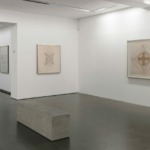
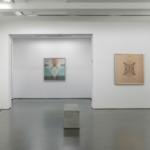
Then, once again at the Serpentine in 2006, I went to London and, in that park, we organized a major retrospective of Emma Kunz. The exhibition was realized in collaboration with the artist Christodoulos Panayiotou, who designed the furniture. Instead of sitting on ordinary chairs as we do now, visitors sat on chairs made of stone—crafted from that very rock. One can imagine a deeply holistic, all-encompassing experience: we were literally immersed in AION A!

Emma Kunz : visionnary drawings, an exhibition conceived with Christodoulos Panayiotou (Installation view, 23rd March – 19th may 2019 Serpentine Gallery) © 2019 Redsreads.info

Emma Kunz : an

Emma Kunz : visionnary drawings, an exhibition conceived with Christodoulos Panayiotou (Installation view, 23rd March – 19th may 2019 Serpentine Gallery) © 2019 Redsreads.info

Emma Kunz : visionnary drawings, an exhibition conceived with Christodoulos Panayiotou (Installation view, 23rd March – 19th may 2019 Serpentine Gallery) © 2019 Redsreads.info

Emma Kunz : visionnary drawings, an exhibition conceived with Christodoulos Panayiotou (Installation view, 23rd March – 19th may 2019 Serpentine Gallery) © 2019 Redsreads.info
How does Emma Kunz’s work resonate today? Who might you compare her to?
I believe that today’s renewed interest in figures such as Hildegard of Bingen—one of the greatest composers of the Middle Ages, as well as an extraordinary writer, healer, and nun—is highly relevant in this context. A whole new generation is also rediscovering works like those of Emma Kunz.
Watch the interview with Hans-Ulrich Obrist here
Traduction anglaise par Ali Max MATHIS.
We live in an age of communication, yet one often marked by the disappearance of rituals.